How to quote on the porch without underbidding
A price given over the phone is an easy way to lose money. One owner prices a “deck washed” from Google, then finds it covered in lichen in person. Another bid a job over the phone and found triple the job when they got there. Quote from what you can see.
Build a price list you trust and keep it in your pocket:
- Windows by the pane or by the window, with a higher price for second and third stories and for French panes.
- Gutters by the linear foot and by the story, with a charge for heavy clogs or downspout work.
- Washing by the square foot, with separate prices for siding, concrete, decks and roofs.
- A minimum for any job, so a small stop still pays for the drive.
When you can’t see the job, ask for photos before you give a number, or give a range and confirm it on site. Write the quote, send it while you’re standing there, and get a yes in writing before the ladder comes off the truck.
How to split pay the crew can check
Owners say working out each person’s pay is hard to get right. Pick one rule and show everyone the numbers every day.
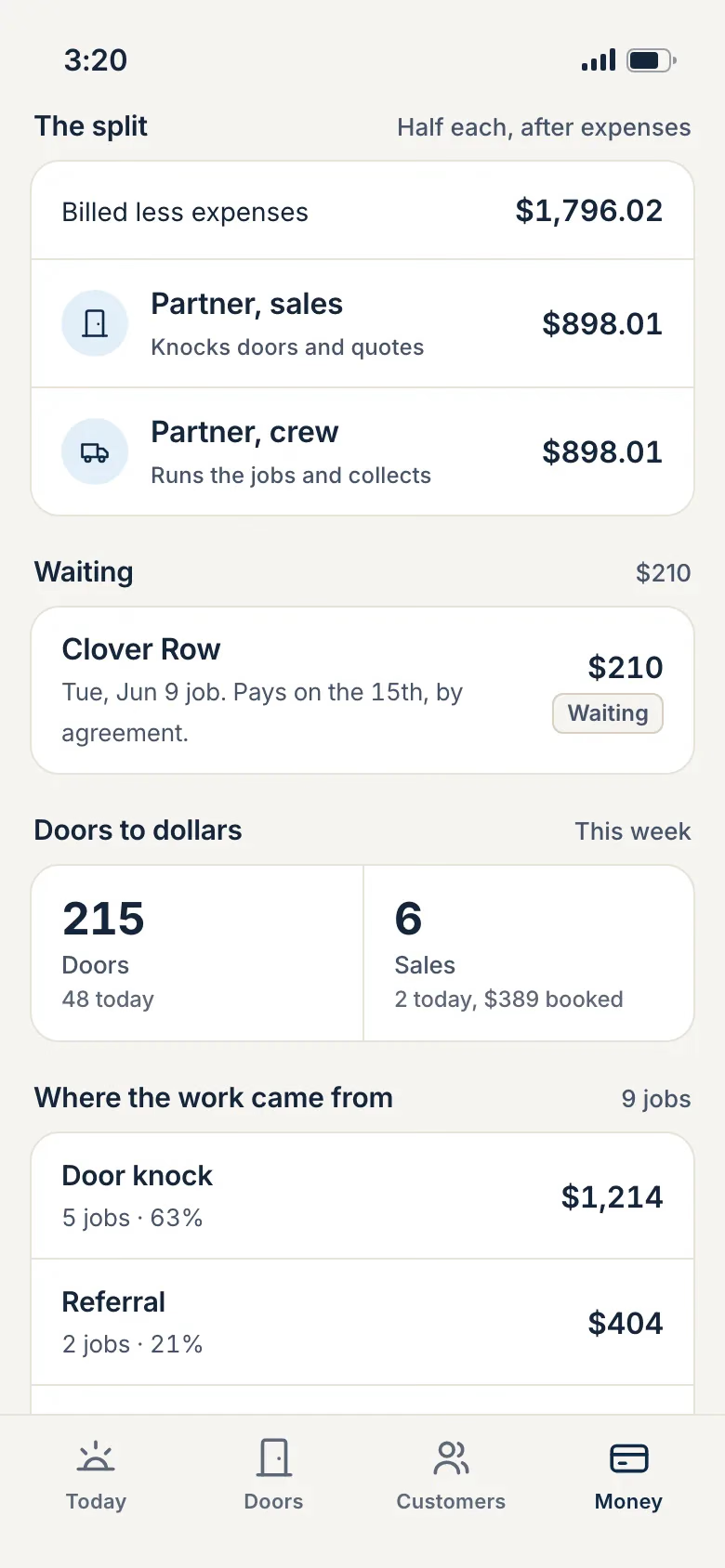
One way is a commission per job. One owner puts 40 percent of each job toward labor, totals the hours each tech spent on it, and divides by the hours. Others pay a flat 50/50 split between 2 partners, or give door knockers a set amount for each lead they bring in. Any of these works if each person can see their jobs, their hours and their share the same evening. Log hours by job, not by day, so the split follows the work.
Door knocking that doesn’t look like a scam
Homeowners worry that a knock at the door is a scam. Give them every reason to trust you:
- A shirt with your name, and the same name on your Google profile.
- A printed price sheet, and a written quote on your phone that they can keep.
- A link to your reviews they can open while you stand there.
- Payment by card through a real invoice, never cash only.
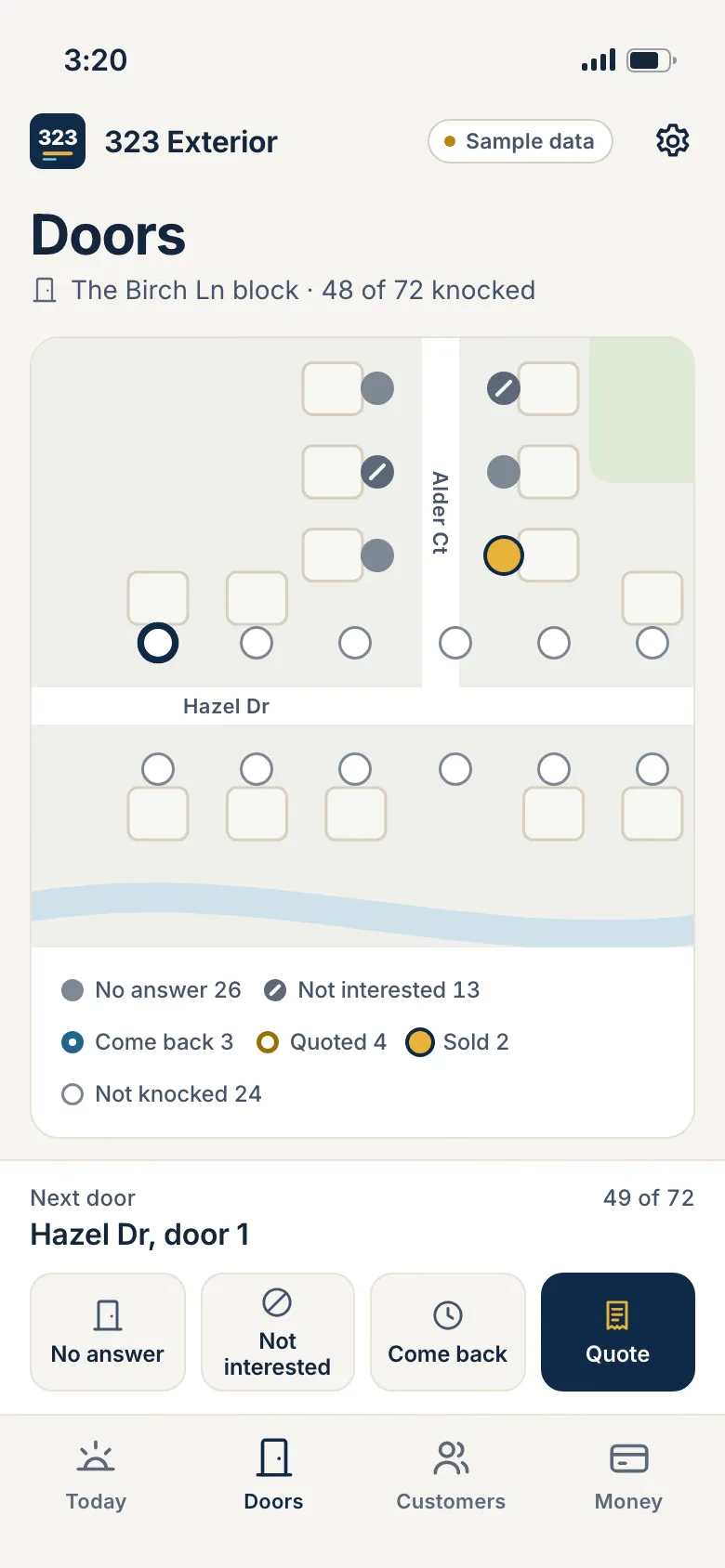
Talk to the homeowner rather than leaving a hanger when you can. Log every door, even the “not now,” so the next knock on that street starts warmer.
What to say at the door, to copy: “Hi, we’re cleaning windows on your street today. Here’s our price sheet. I can price yours right now, and the quote stays on your phone, so there’s no rush.”
What to do in winter
A few kinds of winter work that keep the crew busy:
- Book next spring before the season ends. Text every customer from this year with an early spot.
- Push gutter cleaning hard in the fall, when leaves come down.
- Offer interior windows and storefronts. For storefronts, walk your main street with a printed route price: a set price per visit, every 2 or 4 weeks, billed each month.
- Add Christmas light installs. For one owner it grew into a second full-time business. Price by the linear foot, include the take-down in January, offer storage for a fee, and check your state’s rules for electrical work before you sell it.
Recurring plans customers say yes to
A customer who books every spring and fall is 2 jobs a year you don’t have to knock for. The worry is that a plan feels like too much to a customer who only asked for one visit. Keep it simple: offer the one-time price, then the same job twice a year at a small discount, booked now and billed per visit. Show both prices side by side on the quote. The customer picks, and if they take the plan, the second visit is already booked.
What your crew app would do
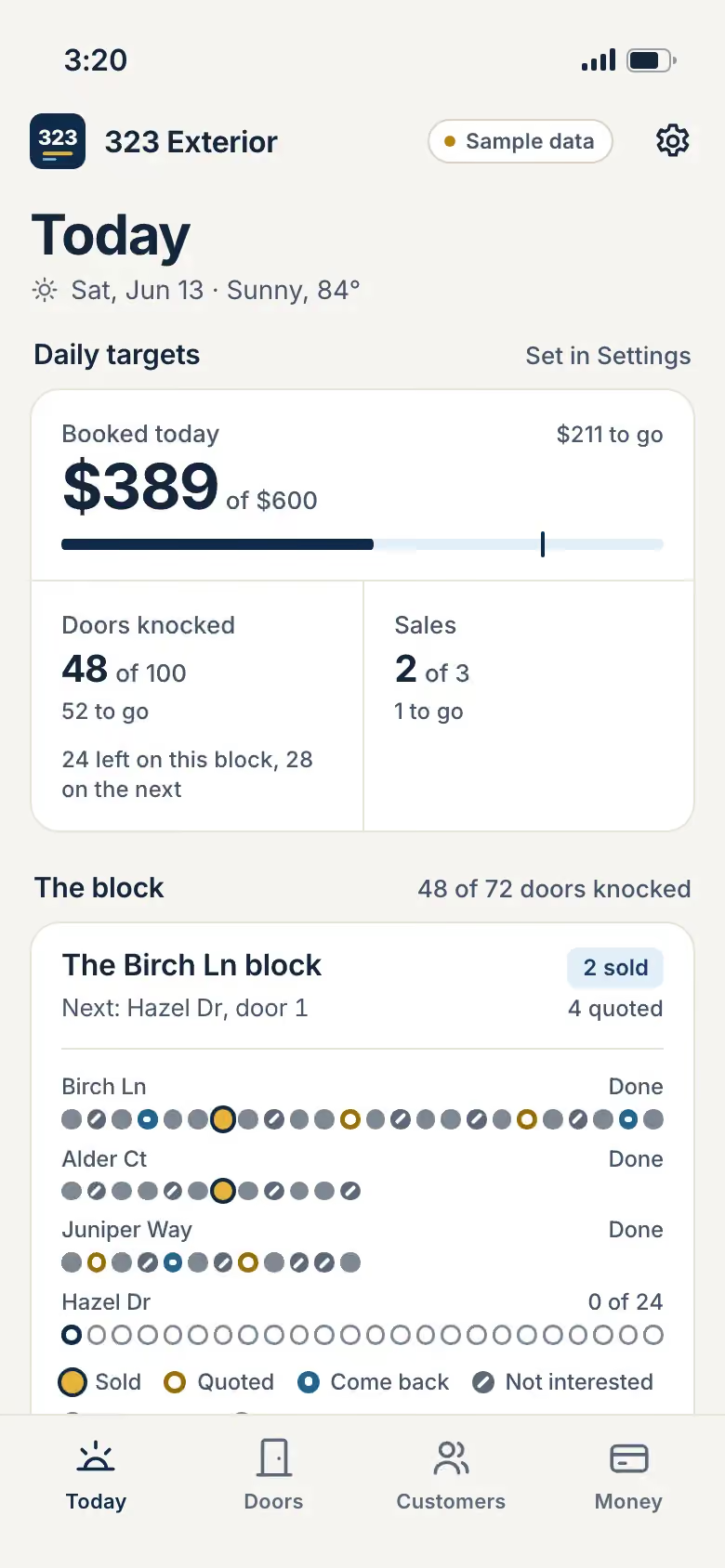
It would be an app for the whole crew. Doors: every door knocked, by street, with what happened. Jobs: the schedule, with notes for each property. Money: quotes from your price list, invoices, payments and each person’s share. Customers: everyone you’ve served, ready for next season’s reminder. Pro adds the automations and an AI teammate that answers new inquiries and drafts quotes for your okay. It would run on the phones of up to 3 people on Pro, or 5 on Growth, and on your computer.
Not ready to start? Have Otis audit your business, free.